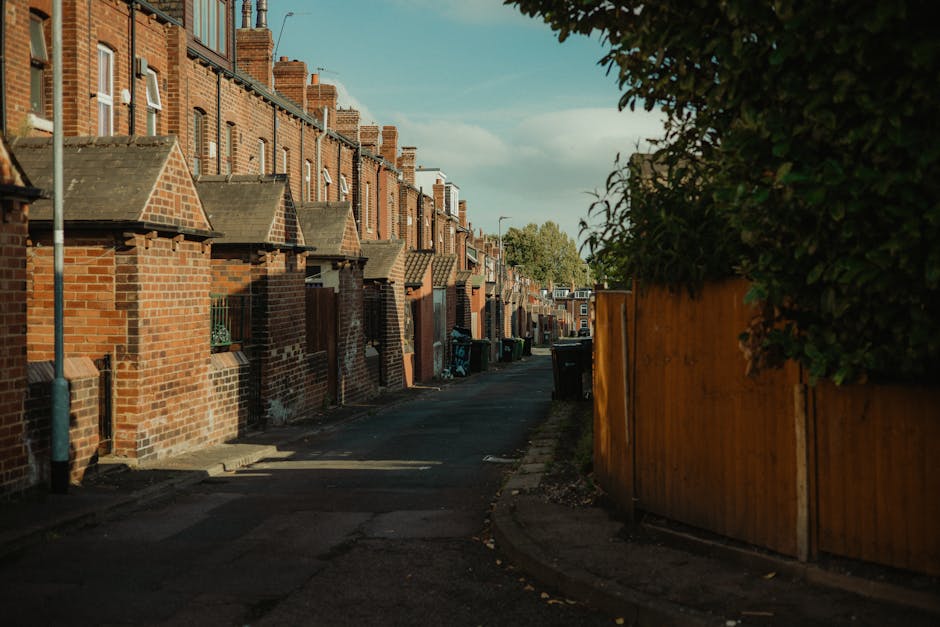
Narrow access rubbish clearance for terraced homes in Wallington
Terraced homes are brilliant for character, but rubbish clearance can be a bit of a squeeze. If you live in Wallington and you've got a narrow hallway, a tight rear passage, awkward side access, or a small front path, you already know the problem: getting bulky waste out without damaging walls, upsetting neighbours, or turning the place into a muddle. That is exactly where narrow access rubbish clearance for terraced homes in Wallington becomes useful.
This guide explains how it works, what to expect, where the tricky bits usually happen, and how to plan a clearance that feels calm rather than chaotic. Whether you're clearing old furniture, bagged junk, renovation debris, or a whole room's worth of clutter, the aim is the same: safe removal with the least disruption possible. And yes, it can be done neatly. More neatly than most people expect, to be fair.
Quick takeaway: the best narrow-access clearances are planned, measured, and paced to fit the house rather than forcing the house to fit the clearance.
For wider household projects, you may also find it useful to look at the broader house clearance service and the company's approach to general waste removal. If your clearance includes a sofa, bed frame, or worn-out dining set, the separate furniture clearance and furniture disposal pages can also help you understand the likely process.
Table of Contents
- Why Narrow access rubbish clearance for terraced homes in Wallington Matters
- How Narrow access rubbish clearance for terraced homes in Wallington Works
- Key Benefits and Practical Advantages
- Who This Is For and When It Makes Sense
- Step-by-Step Guidance
- Expert Tips for Better Results
- Common Mistakes to Avoid
- Tools, Resources and Recommendations
- Law, Compliance, Standards, or Best Practice
- Options, Methods, or Comparison Table
- Case Study or Real-World Example
- Practical Checklist
- Conclusion
- Frequently Asked Questions
Why Narrow access rubbish clearance for terraced homes in Wallington Matters
Terraced streets in Wallington often come with a familiar set of access challenges. Maybe the path is only just wide enough for one person. Maybe there's a shared rear lane. Maybe the front door opens straight into a narrow hallway and the item you want removed is one awkward turn away from freedom. It's not dramatic, but it is enough to slow everything down.
Narrow access matters because clearance work is not just about lifting waste. It's about moving it safely through the property, protecting the home, and keeping the process efficient. A bulky wardrobe or a broken treadmill can be manageable in a modern open-plan house, but in a traditional terrace the same item can feel like trying to pass a sofa through a letterbox. Slight exaggeration. Slight.
Good planning also protects neighbours and shared spaces. Terraces tend to sit close together, which means bins, fences, steps, and parked cars can all become part of the logistics. A careful rubbish clearance keeps noise down, prevents trip hazards, and reduces the chance of scuffed paintwork or chipped plaster. That matters if you're trying to sell, let, refurbish, or simply reclaim your space without the whole street knowing about it.
There's another reason this topic deserves proper attention: not all waste is equal. Bagged general rubbish is one thing, but mixed bulky waste, old furniture, loft junk, or builder's debris needs a clearer plan. If your project is tied to a larger home tidy-up, the broader home clearance service can be a better fit than a one-off uplift, especially when several rooms are involved.
How Narrow access rubbish clearance for terraced homes in Wallington Works
The process is usually more straightforward than people fear, but the key is that it starts with access, not just waste volume. In other words, the team looks at how the rubbish will leave the property before anything is moved. That's the sensible bit. Skip that stage and you end up with avoidable problems, and nobody wants a mattress wedged at an angle near the banister at 8:15 in the morning.
Typically, a narrow-access clearance follows a few practical steps:
- Access review - checking the front path, rear lane, side passage, stair width, door swings, and any tight corners.
- Waste sorting - separating bulky items, bagged rubbish, recyclable materials, and anything that may need special handling.
- Route planning - deciding whether items should go through the front, back, or in stages.
- Careful removal - moving items in manageable pieces where needed rather than forcing a full-size exit.
- Final sweep - tidying the area so the place feels clear, not just emptied.
For some homes, the best route is through the front door in smaller loads. For others, a rear access point or shared alley is the better option. The right answer depends on the house, the street layout, and the type of waste. That's why a quick conversation before the job starts makes a real difference.
Where a clearance includes awkward household items, it can help to compare services. For example, a single old wardrobe may fit under furniture clearance, while mixed clutter from a move-out may be better handled as part of a wider house clearance. And if the job has a more trade-like edge, such as plasterboard offcuts or renovation debris, the builders waste clearance service is the more relevant route.
Key Benefits and Practical Advantages
People often think the main benefit is simply getting rid of rubbish. Fair enough, that is the headline. But the real value is broader.
- Less damage risk - narrow hallways, paintwork, bannisters, and doorframes stay protected when the route is planned properly.
- Less stress - you don't have to wrestle heavy items out yourself or negotiate an awkward turn with a partner who is already regretting the idea.
- Better timing - a professional approach usually means faster removal and fewer false starts.
- Cleaner finish - spaces feel properly reset, not half-cleared.
- More suitable for terrace layouts - older houses often need a more flexible method than standard kerbside loading.
- More sensible for mixed loads - rubbish, furniture, and light renovation waste can be grouped and handled in one visit where appropriate.
There's also a quiet psychological benefit. Once the bulky stuff is gone, rooms look bigger. Light travels further. You hear the house differently. The hallway suddenly feels less like a storage tunnel and more like part of the home again. Strange how that works, really.
If waste reduction and responsible handling matter to you, it is worth reading the company's approach to recycling and sustainability. Even in a small terrace clearance, there can be useful opportunities to separate reusable or recyclable material from general waste.
Who This Is For and When It Makes Sense
This kind of clearance is especially useful for:
- owners of Victorian or Edwardian terraced homes with narrow hallways or staircases
- landlords preparing a property between tenancies
- homeowners decluttering before a sale or renovation
- people clearing a front room, loft, shed, or rear extension
- families dealing with accumulated junk after a long period of storage
- anyone who has already looked at the item and thought, "That is not going out the normal way."
It makes sense when items are too large, too awkward, too heavy, or too numerous for a simple DIY trip to the tip. It also makes sense when time matters. You may have decorators coming in, a move scheduled, or a viewing booked. In those moments, slow and messy is the enemy.
It's not only for big clear-outs either. Sometimes one badly placed item causes the whole headache. A sofa caught on a staircase. A fridge that won't turn at the landing. A broken chest of drawers that splinters when you try to drag it. Those are exactly the little problems that make a narrow-access service worth considering.
Step-by-Step Guidance
If you want the job to go smoothly, the best approach is methodical. Not fancy. Just methodical.
- List what needs removing
Walk through the property and separate items into groups: bulky furniture, bagged rubbish, mixed junk, and anything potentially recyclable. - Measure the tight spots
Doorways, stairs, hallway bends, side access, and gate openings all matter. Even a couple of centimetres can change the plan. - Check the route outside
Look at where waste will be carried, where the vehicle can stop, and whether parking restrictions or neighbours' cars may affect the timing. - Flag fragile areas
Painted walls, low ceilings, tight corners, and glass panels should be noted in advance. - Decide what needs dismantling
Some items are easier, and safer, when broken down before removal. Wardrobes, bed frames, and shelving are common examples. - Choose the right clearance type
A single bulky item is different from a full household clearance. Match the service to the load. - Prepare the space
Move pets, clear pathways, and put aside anything you want to keep. Simple, but useful. - Confirm what happens after collection
Ask how items will be sorted, recycled, or disposed of. It helps set expectations and avoids surprises.
One practical note: if your clearance includes a garage, loft, or shed as well as internal rooms, it may be sensible to combine services. A loft clearance can save a lot of repeat handling, while a garage clearance is often the difference between a one-off job and a half-day of back-and-forth.
Expert Tips for Better Results
In our experience, the best narrow-access jobs are the ones where everyone knows the awkward bit before it happens. That sounds obvious, but you'd be surprised how often people spot the problem only when the item is already halfway through the doorway. Too late then.
- Photograph the access points - a couple of clear photos can show more than a long explanation over the phone.
- Measure the tallest and widest items - especially wardrobes, mattresses, appliances, and flat-pack furniture that was never as flat as it claimed to be.
- Clear a staging area - a small space near the exit helps the team work faster.
- Protect floors if needed - especially on older wooden floors or narrow hall runners.
- Tell the team about shared access - rear alleyways, neighbour boundaries, and communal entrances can change the plan.
- Keep one room as a holding area - if the clearance is spread across the house, this keeps everything orderly.
Here's a small but useful trick: if you are unsure whether an item will fit, assume it won't until someone has measured it properly. That saves a lot of hopeful guesswork. Hope is lovely. Measurements are better.
For situations where trust and handling standards matter, it's worth reviewing the business's health and safety policy and insurance and safety information. That is especially sensible when the job involves stairs, heavy lifting, or fragile interiors.
Common Mistakes to Avoid
Most problems in narrow-access clearances are preventable. The same few errors come up again and again.
- Leaving access checks too late - by then, planning options are reduced.
- Underestimating bulky items - what looks manageable in a room can be a nightmare in the hallway.
- Blocking the route with loose clutter - sounds minor, but it slows everything down.
- Forgetting about parking or loading space - the vehicle matters as much as the front door.
- Trying to force awkward items - this is when damage happens.
- Mixing waste types carelessly - a cleaner separation can make the whole process smoother.
Another common mistake is assuming every clearance is the same. It really isn't. A terrace with a narrow staircase and a shared rear alley behaves very differently from a semi-detached house with broad side access. The plan must match the property, otherwise the process turns clumsy very quickly.
Tools, Resources and Recommendations
You do not need a van full of specialist kit to prepare for a clearance, but a few simple tools make the job much easier.
| Item | Why it helps | Best used for |
|---|---|---|
| Measuring tape | Checks doorway, staircase, and furniture dimensions | Planning access |
| Marker labels | Shows what stays and what goes | Sorting rooms quickly |
| Strong refuse sacks | Keeps loose waste contained | Bagged rubbish and small debris |
| Basic gloves | Helps with rough edges and dusty items | Light prep work |
| Dust sheets or floor protection | Reduces scuffs on narrow routes | Stairs and hallways |
| Phone photos | Gives a clear record of access and item size | Pre-quote planning |
When comparing service pages, the most relevant ones for terraced homes tend to be flat clearance, home clearance, and the main waste removal information. Each can be useful depending on whether the challenge is access, volume, or type of waste. The naming matters less than the fit, honestly.
If cost transparency is important before you book, take a look at pricing and quotes. And if you want to understand the company background and approach before moving ahead, the about us page is a sensible place to start.
Law, Compliance, Standards, or Best Practice
Clearance work in the UK needs to be handled responsibly. You don't need to become an expert in waste law, but you do want to know that waste is being carried, stored, and disposed of properly. That is standard good practice, not an optional extra.
For householders, the main practical concern is to use a provider that takes waste handling seriously and can explain what happens to collected items. Reputable operators should also work in line with accepted safety practices, particularly where lifting, access, and vehicle loading are involved. If a job involves anything sharp, heavy, dusty, or potentially hazardous, extra care is sensible.
It is also wise to understand that different waste streams may be separated for recycling or disposal. Mixed rubbish, wood, metal, furniture, and renovation debris are not always treated the same way. That is why a quick description of the load helps more than a vague "a bit of everything" message. Very British, that phrase. Also not very helpful.
In addition, if your property is in a terrace with shared access, consider neighbour courtesy as part of best practice. Keep paths clear where possible, avoid blocking entrances, and let others know if a vehicle will be stopping nearby. Small things, but they keep the job civil and calm.
If you want to review the company's policies around complaints, privacy, and terms before booking, those pages are available here: complaints procedure, privacy policy, and terms and conditions. They are not the exciting bits, obviously, but they do help build confidence.
Options, Methods, or Comparison Table
Different access problems call for different approaches. Here's a simple comparison to help you think it through.
| Method | Best for | Pros | Watch-outs |
|---|---|---|---|
| Front-door carry-out | Small to medium loads with usable hallway access | Simple, direct, often quick | Can be awkward with tight turns or stairs |
| Rear access removal | Terraces with lanes, gardens, or rear gates | May reduce disturbance inside the home | Needs clear outdoor access and route planning |
| Partial dismantling | Bulky furniture and large household items | Makes tight items manageable | May take longer if items are fragile |
| Room-by-room clearance | Homes with clutter across several floors | Organised and less chaotic | Needs a bit more setup time |
| Combined service visit | Multiple waste types or several areas at once | Efficient and practical | Requires clearer sorting before the job begins |
The right method depends on the layout and the load. A one-size-fits-all approach rarely works well in terraced houses. Access is the boss here.
Case Study or Real-World Example
Imagine a typical Wallington terrace with a narrow hallway, a small front reception room, and a rear spare room that has slowly become the home of an old armchair, a broken coffee table, two bags of soft waste, and a wardrobe that has seen better decades. There's also a loft hatch upstairs with a few boxes of mixed clutter. Nothing outrageous, just the kind of accumulation that happens when life gets busy.
The challenge is not the amount alone. It's the route. The wardrobe may fit only if it is turned a certain way. The armchair might need to be carried in a clean line with someone guiding the front edge. The bags can come out easily, but the boxes from the loft need a bit more care because the stairs are tight and the turning point halfway down is unforgiving.
In a case like this, the sensible approach is to stage the items near the exit, protect the hall flooring, and remove the heaviest pieces first while the route is still clear. The loft boxes come last, once the bigger items are already gone. That keeps the process less cramped and makes the space feel lighter as it goes. You can almost hear the house exhale, if that doesn't sound too dramatic.
If the clearance also includes old shelving or a dismantled bed frame, a furniture-focused service can make things easier. And if the job extends into the attic, a dedicated loft clearance is often the most practical part of the plan.
Practical Checklist
Use this before the clearance day arrives.
- List every item you want removed.
- Measure the narrowest doorway, stair turn, and gate.
- Take photos of any awkward access points.
- Decide which items may need dismantling.
- Clear floors, steps, and hallways of loose clutter.
- Move pets and keep children away from the working route.
- Check whether parking or vehicle access could affect timing.
- Separate items you want to keep from items going.
- Ask how mixed waste will be handled.
- Confirm that the team understands the terrace layout before arrival.
A calm start usually means a smoother finish. Simple as that.
If you are ready to move from planning to action, the most direct next step is to contact the team through the contact us page and explain the access issue clearly. A few honest details at the start can save a lot of hassle later.
Get a free quote today and see how much you can save.
Conclusion
Narrow access rubbish clearance for terraced homes in Wallington is all about respecting the shape of the property. The hallways are tight, the turns can be awkward, and the route matters just as much as the rubbish itself. Once you plan for that properly, the whole job becomes more manageable, less disruptive, and a lot less stressful.
Whether you're clearing one bulky item or several rooms at once, the best results come from clear access information, sensible sorting, and a team that understands how terraced homes actually work in real life. Not just on paper. Not just in theory.
And when it's done well, you get more than an empty room. You get breathing space. That matters more than people think.
Frequently Asked Questions
What counts as narrow access in a terraced house?
It usually means a property where doorways, hallways, staircases, side passages, or rear access points are too tight for standard bulky-item removal without planning. The exact issue might be width, turns, steps, or all three.
Can you remove furniture through a narrow hallway?
Often yes, but it depends on the item size and the route. Some furniture can be carried carefully as it is, while other items need partial dismantling first. Measuring before the day helps avoid guesswork.
Is narrow access rubbish clearance more expensive?
It can be, depending on how much extra time, handling, or dismantling is needed. That said, not every job carries a premium. The best way to know is to describe the access clearly and ask for a quote based on the real layout.
Do I need to move everything into one room first?
Not always. It can help, but some clearances work better when the team removes items directly from different rooms. If your house is cramped, forcing everything into one area can actually make things harder.
What if my terrace has rear lane access?
That can be very helpful, but only if the route is clear and safe. Rear access can reduce disruption through the house, though it still needs checking for gates, steps, uneven ground, and any obstructions.
How should I prepare for a narrow access clearance?
Clear walkways, take measurements, photograph the tight spots, and separate what is staying from what is going. If you have pets or small children, plan for them to be away from the working area during collection.
Can old loft junk be included in the same visit?
Yes, if the access is safe and the load is described in advance. Loft clearances often work well alongside other waste removal because the team can plan the day around multiple areas of the house.
What types of waste are suitable for this kind of clearance?
Common items include general household rubbish, broken furniture, boxed clutter, soft waste, shelving, and light renovation debris. If there is anything unusual, heavy, sharp, or potentially hazardous, mention it early.
Will the clearance team take items apart if needed?
Often yes, if dismantling is practical and safe. Wardrobes, bed frames, and shelving are common examples. Not every item should be broken down on site, though, so the best approach depends on the item and the access route.
What happens to the waste after it is collected?
That depends on the type of material. In many cases, items are sorted for reuse, recycling, or disposal. If responsible handling matters to you, it is worth asking about the company's recycling approach before you book.
How do I know whether I need house clearance or waste removal?
If you are clearing a whole property or several rooms, house clearance is usually the closer fit. If the job is more about mixed rubbish, bagged waste, or a specific collection, waste removal may be more appropriate.
Should I ask about insurance and safety before booking?
Yes, absolutely. Narrow access work involves lifting, carrying, and moving items through tight spaces, so it is sensible to check that the provider takes safety seriously and has clear policies in place.
How far in advance should I arrange a clearance in Wallington?
As soon as you know the access challenge and the date you need the space cleared. If you are working to a move-out date, refurbishment schedule, or viewing, earlier is always better. A bit of notice makes everything calmer.