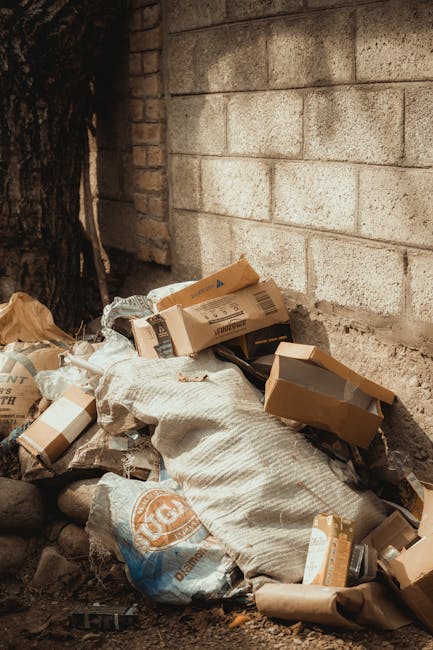
Avoid hidden charges in Wallington rubbish removal quotes
If you have ever compared rubbish removal prices and thought, "That looks fine... until the extras appear," you are not alone. Hidden charges can turn a straightforward clearance into a frustrating, expensive mess. This guide explains how to avoid hidden charges in Wallington rubbish removal quotes, what to look for before you book, and how to compare providers properly so you are not caught out on the day. It is written for real-world jobs too, from a quick garage tidy to a full house clearance or a small office move. Let's make the quote process a bit less slippery, shall we?
In practice, the cheapest quote is not always the best value. A clear price, a proper load assessment, and honest communication usually matter more than a flashy headline number. The good news? Most hidden costs are avoidable once you know the usual traps.
Table of Contents
- Why avoiding hidden charges matters
- How rubbish removal quotes should work
- Key benefits and practical advantages
- Who this is for and when it makes sense
- Step-by-step guidance
- Expert tips for better results
- Common mistakes to avoid
- Tools, resources and recommendations
- Law, compliance and best practice
- Options, methods and comparison
- Case study or real-world example
- Practical checklist
- Conclusion
- Frequently asked questions
Why avoiding hidden charges matters
Rubbish removal should feel simple: you show the waste, receive a quote, and pay the agreed amount once the job is done. Hidden charges break that trust. They usually show up as "unexpected" labour fees, extra item charges, access surcharges, or disposal add-ons that were never made clear at the start.
For homeowners, landlords, tenants, and small businesses in Wallington, the impact is not just financial. It also adds stress at the exact moment you want the job finished. A quote that changes later can throw off a moving budget, eat into renovation funds, or make a tenant checkout more awkward than it needs to be.
To be fair, some price changes are legitimate. If the load turns out to be larger than described, or access is much worse than expected, a reasonable adjustment may be fair. The issue is not all extra costs; it is hidden or poorly explained ones. There is a big difference between a transparent revision and a surprise charge slapped on after the van is loaded.
Hidden charges also make comparison shopping misleading. A low estimate that excludes labour, congestion, difficult access, or disposal fees is not really cheaper. It just looks cheaper. And that is where people get caught.
Expert summary: A trustworthy rubbish removal quote should explain what is included, what could change the price, and exactly when a revised cost may apply. If a provider cannot explain that in plain English, treat it as a warning sign.
If you want a clearer starting point, the site's pricing and quotes page is a useful place to understand how a proper estimate should be presented.
How rubbish removal quotes should work
A proper rubbish removal quote is usually based on a few simple factors: the volume of waste, the type of items, how easy it is to access, how long the job will take, and any special disposal requirements. The quote may be done by photos, a phone discussion, or an on-site visit for larger or more complicated clearances.
The key is transparency. You should know whether the price is based on:
- load size or van space used
- number of labourers needed
- item type, such as bulky furniture or builders' waste
- floor level, stairs, distance from the property, or parking constraints
- recycling, segregation, or disposal requirements
That sounds basic, but many quote problems come from assumptions. For example, a customer may say "just a few items," but the job turns out to include heavy wardrobes, broken tiles, a mattress, and a pile of damp material in the loft. That is a different job entirely. Not dramatic. Just different.
Some providers give a fixed quote, while others give an estimate that may change if the scope is materially different on arrival. Both can work well if the rules are clear. The problem begins when the quote is vague, especially if the provider avoids putting exclusions in writing.
For instance, if you are clearing old sofas, mixed junk, or a one-off room full of household bits, a specialist page such as furniture disposal can give useful context for item-based pricing expectations.
Key benefits and practical advantages
When you know how to avoid hidden charges, you gain more than price control. You get better planning, less stress, and a smoother collection day. That can matter just as much as saving a few pounds.
- Better budgeting: You can compare quotes on equal terms instead of comparing apples with oranges.
- Fewer disputes: Clear scope and pricing reduce disagreements at the kerbside or front door.
- Faster decision-making: Transparent quotes make it easier to choose a provider with confidence.
- Less disruption: No awkward haggling when the team arrives and the job is already underway.
- More trust: A clear quote often reflects a more organised business overall.
There is also a practical benefit that gets overlooked: better quotes make it easier to plan access. If a team knows there is a narrow stairwell, a top-floor flat, or limited parking, the price can be set honestly from the start. That saves everybody a headache later.
And yes, it helps with more than domestic waste. Businesses arranging regular collections, or a one-off clearance at the end of a tenancy, need clarity too. If you are handling office items or recurring waste streams, business waste removal and office clearance are both areas where transparent pricing matters a great deal.
Who this is for and when it makes sense
This advice is for anyone booking rubbish removal in Wallington and wanting to avoid bill shock. That includes:
- homeowners clearing rooms, lofts, or garages
- tenants needing to leave a property tidy
- landlords dealing with end-of-tenancy waste
- small businesses clearing stock, fixtures, or office furniture
- builders and tradespeople managing mixed site waste
- people clearing bulky one-off items after a move or refurbishment
It is especially useful when the job is not visually simple. A small pile in the hall may hide much more in the loft. A garden clearance can look tidy from the gate but still include soil, branches, and old sleepers that are heavier than they appear. If you are pricing something like garden clearance or builders' waste clearance, the details really matter.
If you are in a flat, access becomes even more important. Stairs, shared hallways, parking limits, and lift availability can all affect the time needed. For that type of job, flat clearance can be a more accurate service to explore than a generic waste collection.
Truth be told, hidden charges tend to appear most often when the customer and the provider are working from different mental pictures of the same job. One thinks "one van load"; the other thinks "two trips and a two-person crew." That mismatch is the whole game.
Step-by-step guidance
Use this process before you accept any rubbish removal quote in Wallington. It takes a little time, but not much. And it can save a lot of hassle.
- Describe the waste clearly. Be specific about item types, approximate quantity, and whether anything is heavy, broken, wet, sharp, or awkward.
- Share photos from more than one angle. One photo is often not enough. Take a couple from different corners so the provider can judge the volume properly.
- Explain access honestly. Mention stairs, lifts, parking, long carries, locked gates, or restricted entry. If a van cannot park nearby, say so.
- Ask what is included. Confirm labour, loading, disposal, recycling, and any minimum charges. Do not assume.
- Ask what could change the price. A fair provider should tell you which factors may alter the quote and by how much.
- Get the terms in writing. A written message or quote is far better than a vague phone promise. Memories get fuzzy. Fast.
- Check the final collection process. Confirm whether the team will load from inside, from the kerb, or from a specific room.
- Keep the conversation open on the day. If the load is different from the description, ask for a revised explanation before work continues.
There is another small but useful habit: ask whether the company is happy to split a job into stages. That can help with larger clearances, especially if you are dealing with a loft, garage, or multi-room house clearance. The site's loft clearance, garage clearance, and home clearance pages are relevant if you are planning a broader clear-out.
Expert tips for better results
After plenty of real jobs, a few patterns stand out. The best quotes come from the best information. That sounds almost too obvious, but honestly, it is where many people slip up.
1. Use measured language, not guesswork
Instead of saying "a bit of rubbish," try "about six black bags, one wardrobe, two bedside tables, and some cardboard." That immediately improves the accuracy of the quote.
2. Mention awkward items upfront
Mattresses, fridges, heavy timber, rubble, plasterboard, and wet garden waste may all affect the disposal process. Even if a provider is happy to take them, they may need to price them differently.
3. Ask for the collection route to be considered
If the team has to carry items through the house, down narrow stairs, or across a long driveway, that should be part of the conversation. Otherwise, you might end up paying for an assumption that was never checked.
4. Check payment terms before booking
A safe, sensible payment process matters. A proper quote should sit alongside clear payment expectations. If the company offers card, cash, or invoice options, you should know this in advance. The page on payment and security is worth reviewing before you commit.
5. Ask what happens if the waste is less than expected
Good question, right? If the actual load is smaller, does the price reduce, or is there a minimum charge? The answer should be clear before the crew turns up.
6. Choose transparency over bravado
Some providers sound very confident but say very little. That can be a red flag in fancy clothing. Clear, plain answers are better than polished waffle. Every time.
Common mistakes to avoid
Here are the mistakes that most often lead to hidden charges or awkward job-day surprises.
- Accepting a quote without checking exclusions. If labour, access, or disposal are excluded, the "price" may be incomplete.
- Describing waste too vaguely. "Mixed rubbish" can mean almost anything.
- Forgetting access details. A job on paper can become much harder if parking is tight or the lift is out of service.
- Assuming all waste is priced the same. Waste type matters. Builders' waste, furniture, garden waste, and general junk are not identical jobs.
- Not asking about minimum charges. A small collection can still have a lower charge threshold.
- Choosing only on headline price. Cheapest upfront can mean more expensive overall if extras are added later.
- Ignoring the company's policies. Clear policies around complaints, safety, and terms often reflect a more dependable operation.
It also helps to avoid a very human mistake: trying to make the job sound smaller than it is because you want a lower quote. Everyone does it a little. But if you understate the load, the price may change anyway, and then the whole thing becomes awkward. Better to be upfront and save yourself the faff.
Tools, resources and recommendations
You do not need special equipment to manage quote accuracy, but a few simple tools make things much easier.
- Phone camera: Take clear photos in good light so the provider can see the full load.
- Notes app: List item counts, room locations, and anything heavy or fragile.
- Measuring tape: Helpful for bulky furniture and awkward access points.
- Calendar reminder: Useful if the collection depends on parking permissions or access timing.
On the website, the most useful pages for this topic are the ones that explain service scope and expectations: pricing and quotes, waste removal, and recycling and sustainability. Those pages can help you understand what a responsible clearance job should look like, not just what it costs.
If you need reassurance about how the business operates more broadly, about us, insurance and safety, and terms and conditions are also useful reads. They may not be the exciting part, but they do help when you want to judge whether a company is properly set up. And let's face it, boring paperwork can be very comforting when money is involved.
Law, compliance, standards and best practice
When rubbish is collected in the UK, the provider should handle disposal responsibly and in line with relevant waste duties and general legal expectations. You do not need to be an expert in waste law to ask sensible questions, but you should expect the company to understand its responsibilities.
In practical terms, that means the business should be clear about what it can collect, how waste is handled, whether items are recycled where possible, and what happens to restricted or hazardous materials. If a quote is unusually vague around disposal, that is not a great sign. Nor is a company that cannot explain how it manages safety during lifting, carrying, or loading.
For customers, the best practice is simple:
- be honest about the waste type
- do not ask anyone to remove prohibited or dangerous items without checking first
- read the terms before booking
- keep the agreed scope documented
- ask how the company handles recycling and responsible disposal
If your job is sensitive, bulky, or potentially hazardous, use the company's published safety information and policies to check how they work. The pages on health and safety policy and complaints procedure are helpful indicators of how seriously a business takes customer care.
There is no need to become a compliance nerd overnight. Still, a little awareness protects you from a lot of nonsense.
Options, methods and comparison
Not every quote process works the same way, and some are better suited to certain jobs than others. Here is a practical comparison.
| Quote method | Best for | Pros | Watch out for |
|---|---|---|---|
| Photo-based quote | Small to medium clearances | Fast, convenient, easy to compare | Can miss access problems or hidden waste |
| Phone estimate | Straightforward jobs | Quick, good for rough planning | Depends heavily on how well you describe the job |
| On-site quote | Larger or more complex clearances | Often more accurate, good for awkward access | Takes longer and may not suit urgent jobs |
| Fixed-price quote | Well-defined jobs | Best certainty if scope is clear | Terms still need checking for exclusions |
If you are clearing a single item or a few pieces of furniture, a simple photo quote can work well. If you are dealing with mixed waste, builders' debris, or several rooms of items, a more detailed assessment is usually safer.
As a rule, the more complex the access or the heavier the materials, the more value there is in a clearer quote process. That is especially true for items like sofas, white goods, or bulky wardrobes that are awkward to carry and may need extra handling. For those jobs, furniture clearance and furniture disposal can offer a more precise service fit than general waste removal alone.
Case study or real-world example
Imagine a couple in Wallington clearing out a spare room before new flooring goes in. At first glance, the room looks simple: an old bed frame, a broken desk, a few bags, and some cardboard. That sounds quick, maybe one van load at most.
Then they open the cupboard. There are old books, a printer, a couple of crates, and a heavy chair wedged in the corner. The access is via a narrow stairwell, and parking outside is tight because of school traffic at around 3 pm. Suddenly the job is not quite so simple.
If the quote had been based on the first impression alone, the price might have shifted later. But if the customers had shared photos of the cupboard, explained the stairs, and mentioned the parking issue, the provider could have priced it properly from the start. No drama. No awkward discussion when the team arrives. Just a cleaner handover and a fairer result.
That is really the whole point of avoiding hidden charges: not squeezing the lowest possible price out of a job, but making sure the quote reflects the real work. It saves time, keeps the relationship calm, and makes the day feel much less chaotic.
Practical checklist
Use this checklist before approving any Wallington rubbish removal quote.
- Have I described the waste clearly and honestly?
- Have I shared photos from more than one angle?
- Have I mentioned stairs, parking, lifts, gates, or long carries?
- Do I know what is included in the price?
- Do I know what could change the price?
- Have I asked about minimum charges or extra labour?
- Is the quote or estimate written down?
- Do the payment terms make sense to me?
- Have I checked the company's terms and safety information?
- Do I feel comfortable asking follow-up questions before booking?
If you can tick most of those boxes, you are in a good place. If not, slow down a little and ask more questions. There is no prize for being rushed.
Conclusion
Avoiding hidden charges in Wallington rubbish removal quotes is mostly about clarity, honesty, and asking a few smart questions before the van turns up. The more accurately you describe the job, the easier it is to compare prices and spot vague wording. That is true whether you are clearing a loft, a garage, a house, or a stack of office furniture.
The best providers will not mind careful questions. In fact, they usually welcome them. A transparent quote is a sign of a better process, not a fussy customer. And once you get into the habit, it becomes surprisingly easy to tell the difference between a genuine price and one that is hiding something in small print.
Get a free quote today and see how much you can save.
When the details are clear, the whole job feels lighter. A bit less noise, a bit less stress, and a much better chance of getting it right first time. That's worth a lot.
Frequently Asked Questions
What are hidden charges in rubbish removal quotes?
Hidden charges are extra costs that were not made clear when the quote was given. They can include labour add-ons, access fees, disposal surcharges, or charges for specific item types that were not properly explained.
How can I tell if a Wallington rubbish removal quote is genuine?
A genuine quote should clearly explain what is included, what might change the price, and how the job will be assessed. If the provider cannot explain the price in plain English, that is a warning sign.
Should a rubbish removal quote include labour and disposal?
Usually, yes, or at least it should state clearly if those items are separate. Always check whether loading, transport, and disposal are included before you agree to anything.
Why do rubbish removal prices change on the day?
Price changes can happen if the waste volume, weight, access, or item type differs from what was originally described. A fair provider should explain the reason before carrying on.
Is a fixed quote better than an estimate?
A fixed quote gives more certainty if the job is well described. An estimate can still be fine for larger or less predictable jobs, but the conditions for any price change should be clear.
How do photos help avoid hidden charges?
Photos help the provider judge volume, item type, and layout more accurately. Clear photos from different angles reduce the risk of misunderstandings and surprise charges.
Do stairs or awkward access affect the price?
They can, because they often make the job slower and more labour-intensive. Always mention stairs, long carries, or limited parking when requesting a quote.
Can I reduce my quote by sorting the waste first?
Sometimes, yes. Separating clean recyclables, general waste, and bulky items can make the job simpler. It also helps the provider understand the scope more accurately.
What should I ask before booking rubbish removal?
Ask what is included, what could change the price, how the waste will be handled, and what payment terms apply. It is also sensible to ask about any minimum charges.
Are cheap rubbish removal quotes a bad idea?
Not always, but a very low quote should be checked carefully. If the price seems far below others, it may be missing something important or excluding parts of the job.
What if I have furniture or bulky items to remove?
Bulky items often need more labour and sometimes different handling, so they should be mentioned upfront. Services such as furniture clearance or furniture disposal may be more suitable than a general collection.
How do I avoid surprise charges with a loft, garage, or home clearance?
Give a fuller description than you think is necessary. Mention hidden corners, heavy items, access issues, and any mixed waste. If the job is bigger, specialist services like loft clearance, garage clearance, or home clearance can help set expectations properly.
Where can I check pricing information before I book?
The most relevant place is the site's pricing and quotes page. It is a sensible starting point if you want to understand how the service is priced and what to ask next.